Over the last several years, I've had many friends and Extension clients text or email pictures of snakes they've encountered on their property (some alive...some missing a head), asking for identification. Most of the texts & emails start with: "Is this a copperhead?" But the most common 'villain' in the photo is an eastern milksnake. Because of their colorful gray and brown/black patterns, they are VERY often confused with copperheads. Here in Watauga County, while copperheads do frequent rocky outcrops along the escarpment and other lower elevation spots in the county, you are MUCH more likely to run across a milk snake (or other non-venomous ones).
The Misunderstood Milk Snake
(Updated: June 17, 2025, 10:54 a.m.)

The eastern milksnake is quite common across all of the High Country counties. While I haven't heard it referred to as any of these other names, apparently it's also called: chain snake, cow-sucker, highland adder, horn snake, leopard-spotted snake, milk sucker, pilot, and thunder-and-lightning snake. While a lot of these names imply #DANGER!, milk snakes are rather small and timid...unless you decide to try to handle them. They will bite! However, they are not venomous. Milksnakes feed on a variety of small critters: primarily mice but also other small mammals, snakes, birds & bird eggs, slugs, and insects. Apparently its name, milk snake (as well as 'cow-sucker') originated from where they are often found...in or near barns. Apparently the old-timers believed them to be doing unmentionable things to their livestock. They are nocturnal predators that like hanging out in mixed open and shady habitats...basically between the house/barn, the yard, and the woods.
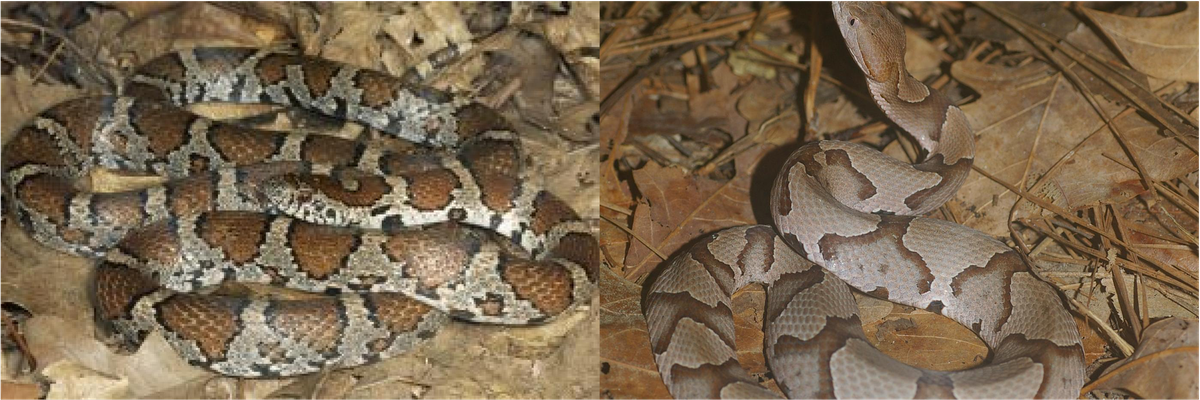
The easiest way to tell the difference between a milksnake and a copperhead is by color and pattern. Copperheads tend to be a more golden brown color with a 'hershey-kiss' pattern, while milk snakes have a more 'blotchy' pattern of dark brown/gray/black spots or bands. If you dare to get close enough to look them in the eyes, you'll notice that milk snakes have rounded pupils, while copperheads, which are pit vipers, have a more 'sinister-looking' slit.
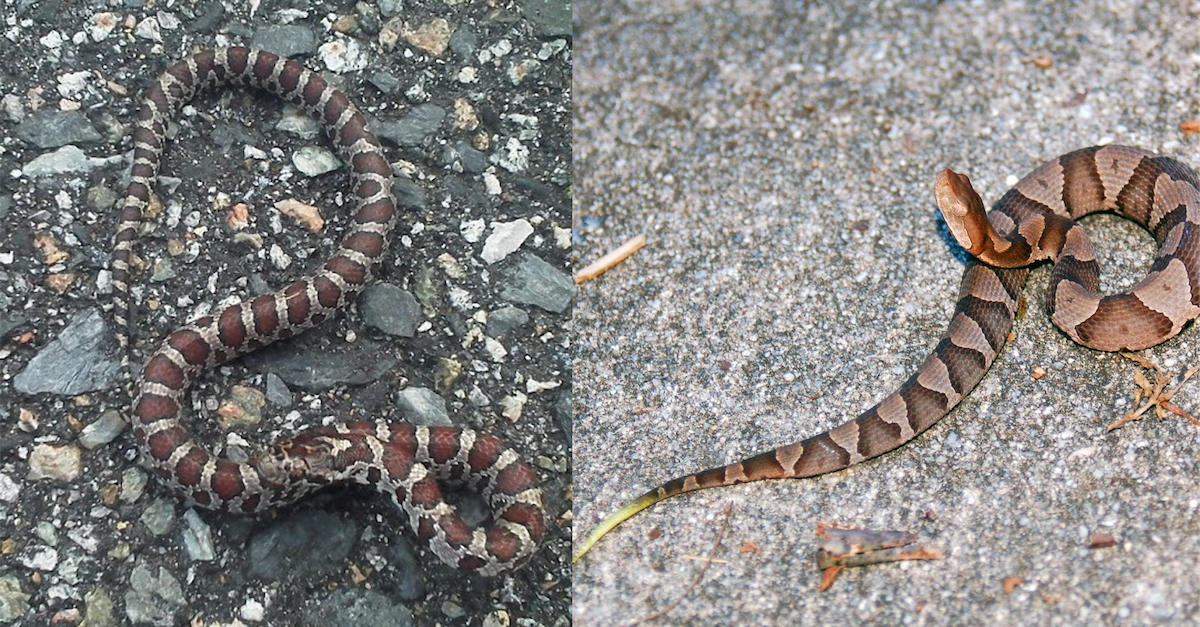
To me, while both snakes are 'pretty' in their own right, copperheads have much more symmetrical patterning, while milk snakes are just more dark and blotchy...here in the High Country, anyway. But their patterns vary depending on where you go. In some parts of the country, milk snakes can have red & light gray bands. Regardless, milk snakes (and even copperheads!) play an important role in our ecosystem--feeding on often unwanted rodents and insects...and really just doing what snakes do. So please, before you pick up the hoe or hurt yourself trying to jump up on the patio furniture, take a deep breath and look a little closer. I know a lot of folks don't want ANY snake near their property, but there's no reason to lop a head off (and risk injury to yourself) just from bein' skeered! If you have any questions or need reptile ID, you're welcome to send me a pic: jim_hamilton@ncsu.edu
Join our mailing list!
Enter your email address to receive updates.
Written By

More About